
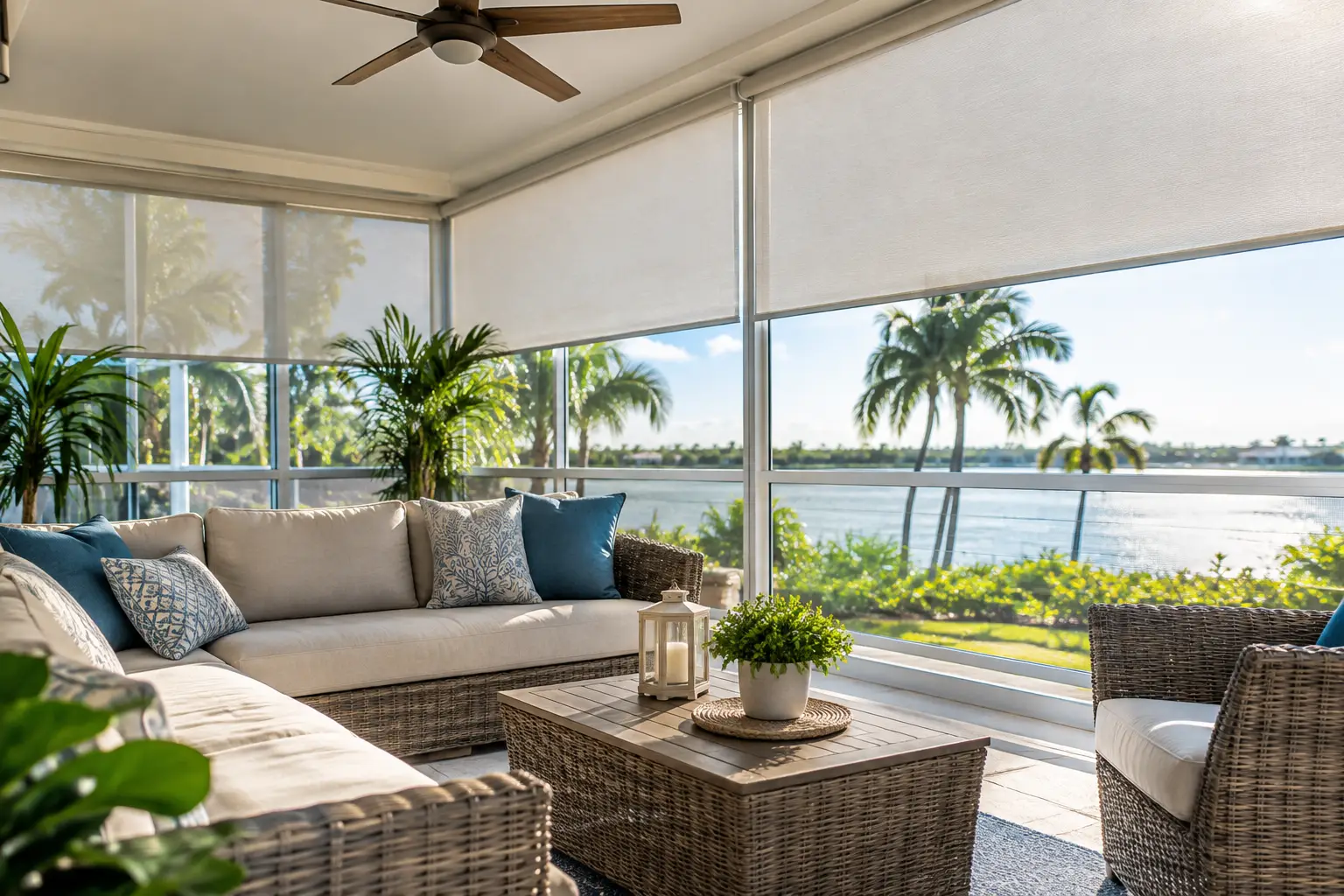
The right sunroom shade project changes more than the view. On a bright Central Florida afternoon, it can turn a room that feels too hot to use into the place where you read, host brunch, watch the rain, or enjoy the pool view without squinting through the glare.
That is why sunroom shades deserve more thought than a quick color choice. Your windows may face morning sun, punishing afternoon exposure, a neighbor’s property, or a beautiful landscape you do not want to hide. The best answer balances heat control, privacy, light, operation, and the style of your forever home.
Start Your Sunroom Shade Project With How You Live
Before looking at fabrics or control options, think about how your sunroom is actually used. A room that serves as a quiet morning coffee spot needs a different solution than a sunroom used for family dinners, a home office, or frequent entertaining.
Pay attention to when the room becomes uncomfortable. East-facing windows often bring intense early glare, while western exposures can make late afternoons feel especially warm. If sunlight reflects off a pool, light-colored pavers, or nearby water, glare may be an issue even when the sun is not directly in the window.
Privacy matters, too. Many homeowners want to preserve an open view during the day but appreciate more coverage at night. That may call for shades that lower independently on each window, top-down/bottom-up designs where appropriate, or a layered approach that gives you daytime filtering and evening privacy.
A thoughtful plan also considers the people using the room. If the windows are tall or furniture sits in front of them, easy operation becomes a priority. If children, pets, or visiting grandchildren spend time there, cordless options create a cleaner, safer look. If the sunroom is part of your daily routine, motorized shades can make light control feel effortless instead of becoming another task.
Choose Shades for Florida Sun, Not Just Appearance
Beautiful shades should also earn their place in the room. Florida sunshine is one of the biggest reasons homeowners begin a sunroom shade project, and every shade category manages that sunshine differently.
Solar shades keep the view in play
Solar roller shades are a natural fit for sunrooms with a view worth keeping. Their specialized fabrics filter harsh sunlight and reduce glare while allowing you to see outdoors during the day. They are especially popular near patios, pools, gardens, and waterfront views because they create a clean, tailored look without making the room feel closed in.
The openness of the fabric matters. A more open weave generally preserves more of the view and brings in more light, while a tighter weave offers greater privacy and glare reduction. Neither is automatically better. The right choice depends on your exposure, the view, and whether nearby homes can see into the room.
At night, remember that interior lighting can reverse daytime privacy. Solar shades may soften visibility, but they do not provide the same complete coverage as a room-darkening shade. This is where an in-home consultation is useful: you can see fabric samples against your own windows and talk through what privacy should look like after sunset.
Cellular shades add comfort and insulation
Cellular shades are a strong choice when your main concern is heat and comfort. Their honeycomb-shaped construction traps air, helping reduce the transfer of heat through the window. In a sunroom with large glass areas, that added insulation can make the space feel more enjoyable throughout the day.
They are available in light-filtering and room-darkening fabrics, along with a wide range of neutral colors that work well with coastal, transitional, and contemporary interiors. The trade-off is that cellular shades generally prioritize softness and efficiency over an open outdoor view. When lowered, they create a calm, finished backdrop rather than a view-through effect.
Roller shades deliver a crisp, modern finish
For homeowners who prefer simple lines, roller shades offer a versatile path. Depending on the fabric, they can filter light, provide more privacy, or create room-darkening coverage. They roll up neatly when you want the windows fully open and sit close to the glass when lowered, which is helpful in a room where large windows are part of the architecture.
A neutral roller shade can disappear into a relaxed Florida palette. A textured or patterned fabric can become part of the design, especially in a sunroom that needs warmth or visual definition. The key is selecting a material that fits the room’s practical needs first, then choosing the color and texture that ties it to the rest of your home.
Woven shades bring texture, with a few considerations
Woven wood and natural-style shades add character that many homeowners love in casual, coastal, and organic interiors. They can soften a room filled with glass and make the sunroom feel more connected to the rest of the home.
However, natural woven materials usually allow some light through, and their appearance can vary slightly from one weave to another. Adding a liner can increase privacy and light control, but it also changes the relaxed, light-filtering effect. They are often best for sunrooms where texture is a high design priority and direct solar exposure is manageable.
Make Coverage Decisions Window by Window
A common mistake is assuming every window needs the exact same treatment. Matching is visually pleasing, but sun exposure is rarely identical across all sides of a sunroom. One wall may need serious glare reduction, while another only needs occasional privacy.
You can still keep the finished look cohesive by using the same collection or color family across the room while adjusting fabric openness, liner choices, or control methods where needed. For example, a solar shade may work beautifully along the view-facing wall, while a room-darkening roller shade makes more sense on a side that catches low afternoon sun.
Consider the window shape and placement before committing to a style. Narrow sidelights, wide glass doors, clerestory windows, and angled openings all require precise measuring and practical planning. A shade that looks right in a sample book may not operate well around door handles, trim, furniture, or a ceiling fan. This is where professional measuring protects both the appearance and the function of the investment.
Decide Whether Motorization Is Worth It
In a sunroom, motorization is often about comfort rather than novelty. If you have a bank of tall windows, multiple shades to adjust, or hard-to-reach openings, a motorized system lets you manage the room without pulling cords or walking from window to window.
You can lower shades before the strongest afternoon sun arrives, raise them for a sunset view, or adjust the entire room from a wall control or app. Some homeowners also appreciate scheduled operation, particularly for rooms that heat up at predictable times of day.
Manual shades remain an excellent choice when windows are easy to reach and you prefer the simplicity of hands-on control. Motorization is most valuable when it solves a real daily frustration. During your consultation, ask which windows truly benefit from it instead of feeling pressured to automate every opening.
Color, Hardware, and Mounting Complete the Look
Sunroom shades should look intentional from both inside and outside the home. White and soft neutral fabrics often keep the room airy while coordinating with common window trim. Warmer beiges, woven textures, and soft grays can add depth without competing with the view.
Inside mounting creates a tailored, built-in appearance when the window frame has enough depth and is square. Outside mounting can cover more of the window opening and may improve light control, especially when trim or shallow frames limit an inside mount. Neither option is universally right. Accurate measurements and a clear look at the room’s architecture make the decision much easier.
Do not overlook valances, cassettes, and exposed rollers. A fabric-wrapped cassette can give a polished finish and conceal the shade when it is raised. In a more contemporary sunroom, a clean exposed roller may be exactly the understated detail the space needs.
Bring Samples Into the Room Before You Commit
Lighting changes everything. A fabric that looks creamy in a showroom can look much cooler beside your flooring, paint, and window trim. A darker weave might feel elegant in a sample but become too heavy across a wall of glass.
An in-home consultation lets you compare real samples in the sunroom at the times of day that matter most. You can hold fabrics near the glass, see how they affect the view, and discuss the practical details that photos cannot show. Florida Blinds And More brings the selection, design guidance, precise measurements, and professional installation to your home, so the recommendation is built around your actual space rather than a guess.
For a room you use every day, the best shade is rarely the one with the most features. It is the one that gives you the right amount of sun, privacy, comfort, and beauty without asking you to compromise on the reason you loved the sunroom in the first place.
