
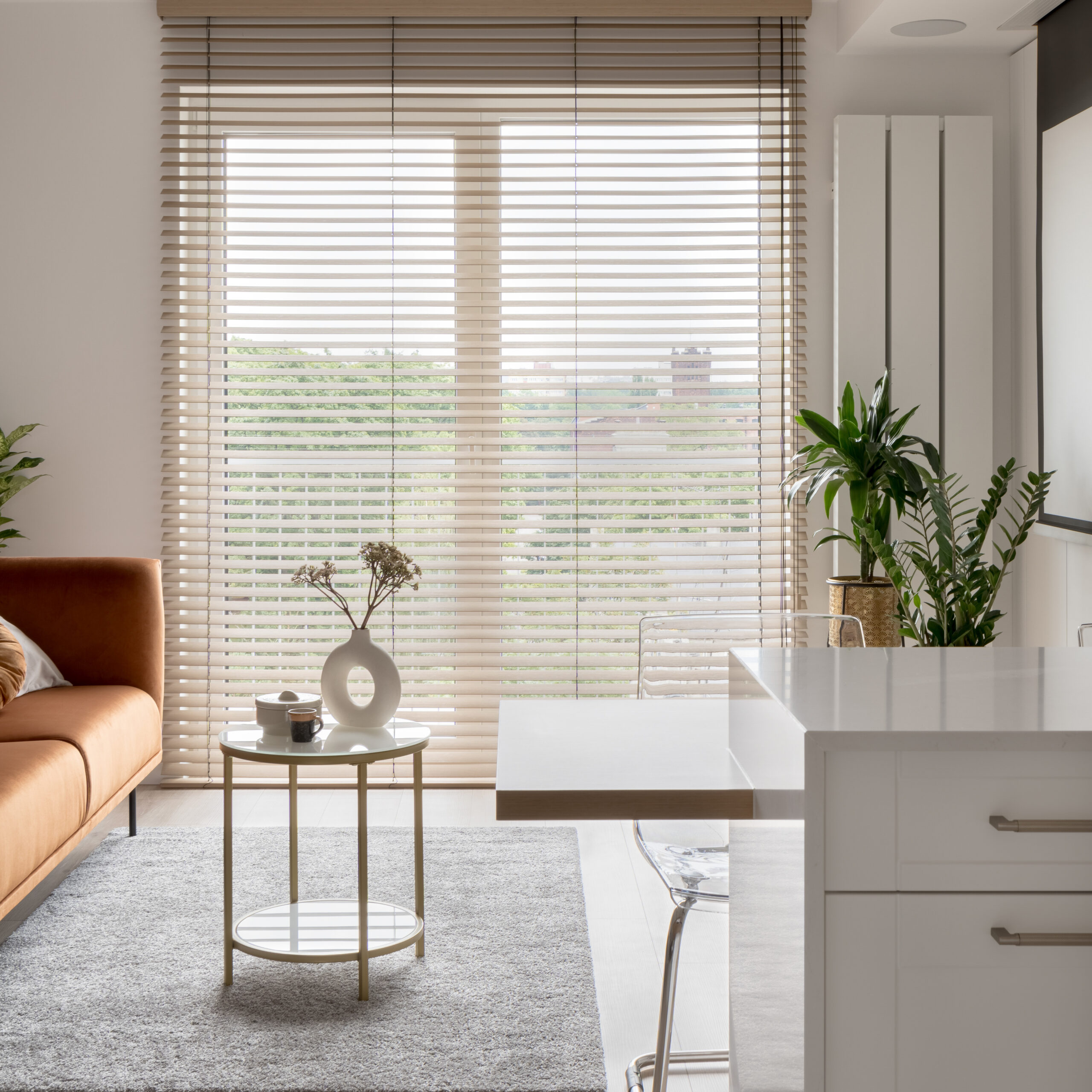
French doors bring in the kind of daylight that makes a Central Florida home feel open, welcoming, and connected to the patio, pool, lanai, or backyard. They can also create a daily battle with afternoon glare, heat, visibility from outside, and doors that need to open without catching on bulky window treatments. The best coverings for french doors solve all of those problems while still letting the doors look like the beautiful architectural feature they are.
The right choice depends on how you use the room, where the doors face, the handle style, and whether privacy, energy efficiency, easy operation, or a softer decorative finish matters most. A treatment that looks perfect in a photo may not work well on an outward-swinging door with prominent hardware. That is why seeing samples, checking clearance, and measuring each door panel in your own home makes such a difference.
What French Door Coverings Need to Do
Unlike a standard window, French doors move. Any covering needs to stay secure when the door opens and closes, avoid interfering with handles and locks, and give you convenient access to the door. For most homes, that means selecting a treatment mounted directly to each door panel rather than one large treatment installed above the full opening.
Florida homeowners also have more to consider than appearance alone. West-facing doors can bring intense late-day sun into a kitchen or living room. Doors near a pool deck may need privacy after dark. Coastal homes and homes with bright outdoor spaces often need reliable glare control without making the room feel closed in.
A well-fitted custom treatment gives you control over light, privacy, and temperature while keeping the doors functional. Here are the options that consistently work best.
Best Coverings for French Doors: 7 Smart Choices
1. Cellular Shades for Heat and Light Control
Cellular shades are a favorite for French doors because they are slim, clean-lined, and highly effective at softening Florida heat. Their honeycomb-shaped pockets help create an insulating layer at the glass, which can make a sunny room feel more comfortable during the hottest part of the day.
They are available in light-filtering and room-darkening fabrics, so you can choose a gentle glow for a breakfast nook or more privacy for a bedroom. A top-down/bottom-up style can be especially useful when you want natural light near the ceiling while keeping the lower portion of the door covered.
The trade-off is style preference. Cellular shades offer a tailored, practical look rather than the dramatic texture of fabric drapery. They are an excellent fit for homeowners who want comfort and clean design with minimal visual bulk.
2. Roller Shades for a Modern, Minimal Look
Roller shades are one of the most versatile answers for French doors, particularly in contemporary homes and renovated spaces. They sit close to the glass and come in a wide range of fabrics, from airy solar screen materials to opaque room-darkening options.
Solar roller shades are particularly helpful on doors facing a bright patio or pool area. They reduce glare and filter harsh light while preserving some outward visibility during the day. For doors that need nighttime privacy, a more opaque fabric is usually the better choice.
The fabric selection matters. A very open solar fabric may look great during daylight hours but will not provide complete privacy once interior lights are on. During an in-home consultation, it is helpful to hold samples against the glass and consider both daytime and evening conditions before choosing.
3. Woven Wood Shades for Warm Florida Style
Woven wood shades bring natural texture to French doors without overwhelming them. Made from materials such as bamboo, grasses, reeds, and woven fibers, they pair beautifully with coastal, relaxed transitional, and organic modern interiors.
These shades create softness that painted shutters or crisp roller shades cannot always deliver. They work especially well when a room needs warmth and personality, such as a dining room opening to a lanai or a living room with pale tile, neutral upholstery, and natural wood accents.
Because woven materials filter light in varied ways, adding a privacy liner is often a smart choice. A liner can improve privacy and light control while preserving the shade’s natural appearance. This option is less about total blackout and more about creating a comfortable, layered look.
4. Roman Shades for a Softer, Finished Design
Roman shades offer the polished presence of drapery with a more compact fit for individual French door panels. When raised, they stack into soft folds. When lowered, they create a smooth fabric surface that can coordinate with upholstery, pillows, wall color, or nearby draperies.
For formal dining rooms, bedrooms, and homes with traditional or transitional style, Romans can make French doors feel intentionally dressed rather than merely covered. Choose a light-filtering fabric for a bright, relaxed feel or a lined option where privacy is more important.
Keep in mind that thicker fabrics and fuller folds require careful planning around the door handle and the door swing. Precision measurement is what keeps a Roman shade looking elegant instead of becoming an obstacle every time someone heads outside.
5. Interior Shutters for Timeless Control
Interior shutters are a strong long-term choice for homeowners who want architectural character, adjustable light control, and an easy-to-clean surface. Custom shutters are built to fit the door panels and typically include cutouts or placement plans that accommodate handles.
Their adjustable louvers allow you to redirect sunlight without fully blocking it, which is valuable in bright Florida rooms. Tilt the louvers upward to reduce glare, close them for privacy, or open the panels when you want an unobstructed view outside.
Shutters do have a more structured, substantial appearance than fabric shades. They are ideal for homeowners who love a classic, permanent finish and want a treatment that feels like part of the home’s design. Moisture-resistant options can be especially practical near pool entrances and humid areas.
6. Mini Blinds or Vertical Blinds for Budget-Friendly Function
For straightforward light control on a tighter budget, blinds can still be a sensible solution. Slim aluminum mini blinds fit neatly on many French door panels and provide adjustable slat control. They are easy to wipe down and work well in utility spaces, rentals, and casual rooms.
Vertical blinds are generally better suited to a wide sliding glass door than to traditional hinged French doors. Still, they may make sense when French doors are part of a larger multi-panel opening and the priority is simple coverage across the entire span.
This category is more functional than decorative. If the doors are a focal point in your forever home, shades, shutters, or drapery panels often deliver a more elevated finish. But practical does not have to mean poorly fitted. Proper mounting and clearance still matter.
7. Drapery Panels for Layered Luxury
Drapery panels can frame French doors beautifully, especially in large living rooms, primary bedrooms, and formal spaces. They add height, softness, and color, while allowing the doors themselves to remain easy to operate when panels are drawn open.
For the best result, drapery is often paired with another treatment on the door, such as a roller shade, cellular shade, or shutter. The door-mounted treatment handles privacy and sun control, while drapery adds the finishing layer. This combination is particularly effective when the doors receive strong sun but the room still deserves a luxurious, furnished feel.
If space is limited beside the doors, full panels may not stack wide enough to clear the glass. In that case, a tailored shade or shutter may be the more practical primary choice.
Details That Make the Difference
French door hardware is not an afterthought. Lever handles, locksets, and decorative knobs all affect the depth and position of the treatment. A custom installer will account for handle clearance, mounting depth, frame width, and whether the door opens inward or outward.
For doors that see frequent traffic, hold-down brackets are often worthwhile. They keep the bottom rail of a shade or blind from swinging when the door moves, making the treatment feel quieter, neater, and easier to live with. Cordless operation is another popular choice for a cleaner appearance and a safer option around children and pets.
Color also changes the experience. White or soft neutral treatments can reflect heat and blend into trim for an airy look. Darker fabrics create more contrast and can improve glare control, but they may make a small room feel heavier. The best color is usually one that works with the room’s light at the time you use it most.
Choose With Your Actual Room in Mind
A free in-home consultation lets you compare fabrics and finishes where they will actually live: against your flooring, wall color, door trim, patio view, and Florida sunlight. Rather than guessing from a small store display, you can see how a solar shade changes glare, how a shutter complements the trim, or whether a woven material gives the room the warmth you wanted.
Florida Blinds And More helps homeowners across Central Florida select, measure, and professionally install custom treatments that fit both the doors and the way the home is used. The goal is not simply to cover glass. It is to make the room more comfortable, private, and finished without making a beautiful set of French doors harder to enjoy.
If you are choosing between two styles, start with the question you will feel every day: Do you need cooler afternoons, more privacy after dark, easier access to the patio, or a stronger design statement? The answer usually points you toward the covering that will feel right long after installation day.
