
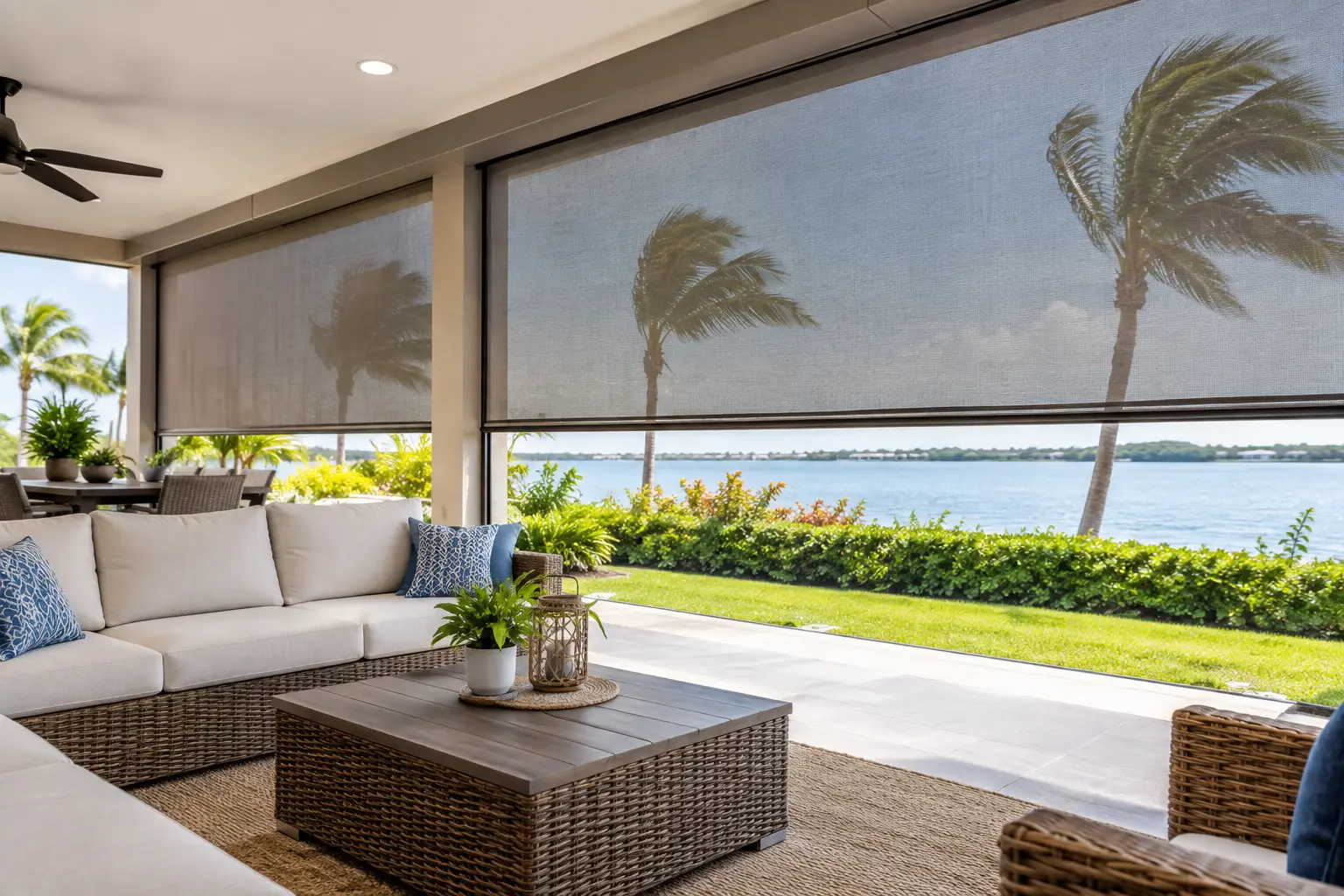
A breezy Florida afternoon is part of the reason we love a patio or lanai. But when an ordinary outdoor shade snaps, billows, or pulls away from its brackets, that breeze can quickly make the space feel unusable. The best patio blinds for wind are not simply heavy fabrics hung outside. They are custom-fitted systems designed to stay guided, stable, and beautiful when the weather changes.
For Central Florida homeowners, the right choice also needs to manage harsh sun, glare off the pool, insects, privacy, and the humid outdoor environment. A well-chosen patio blind helps turn a covered porch, outdoor kitchen, or pool enclosure into a more comfortable part of your forever home – not a room you avoid from May through October.
Why Wind Changes the Patio Blind Decision
Indoor blinds are made for light control, not weather exposure. On a patio, wind creates pressure behind the fabric and along the edges of the shade. If there is too much open space around the sides, or if the bottom bar is not properly secured, the fabric can swing and strain the roller, mounting points, and hardware.
That is why a basic exterior roller shade may work nicely on a protected porch but struggle on an open, breezy waterfront patio. The answer is not always to buy the thickest material available. It is to match the shade system, fabric, and mounting method to the actual conditions around your home.
Wind patterns can differ from one side of a house to the next. A screened lanai may be mostly protected, while a west-facing outdoor kitchen catches every afternoon gust. During an in-home consultation, looking at the openings themselves makes it easier to select a solution that fits the way you really use the space.
Best Patio Blinds for Wind: Guided Exterior Shades
For many Florida patios, exterior roller shades with guided side channels are the strongest all-around option. Rather than allowing the shade edges to float freely, side channels hold the fabric in a track as it moves up and down. This creates a cleaner appearance and gives the blind far more stability in normal breezy conditions.
Zip-track patio shades
Zip-track shades use a reinforced edge that runs inside a channel on each side of the opening. The fabric stays contained in the tracks, which reduces flapping and gaps along the edges. This makes zip-track systems especially appealing for larger patio openings, exposed lanais, and homeowners who want meaningful shade and privacy without giving up their view.
They also create a more finished, tailored look than loose outdoor shades. When lowered, the screen sits taut across the opening instead of behaving like a fabric panel caught in the wind. Depending on the fabric selected, they can soften glare and heat while preserving outward visibility during the day.
Like any outdoor product, zip-track shades have limits. They are not a substitute for storm shutters, and they should be raised when severe weather is expected. A quality installer will explain the operating guidance for the specific system rather than promising that any patio blind can handle hurricane conditions.
Cable-guided outdoor roller shades
Cable-guided shades are another smart option for openings where side channels are not the right visual or structural fit. Tensioned cables run down each side of the shade, helping guide the bottom bar and reduce side-to-side movement.
These shades can provide a lighter, less enclosed look than track systems. They are often a good fit for moderately sheltered patios, balconies, and smaller openings. Still, because cables do not seal the edges in the same way tracks do, they generally offer less wind control than a zip-track design. For a highly exposed coastal patio, side tracks are usually the safer recommendation.
Outdoor shades with hold-downs
For a covered porch that sees occasional breezes, a traditional exterior roller shade with bottom hold-downs may be enough. Hold-down brackets or straps secure the bottom bar when the shade is fully lowered, helping prevent it from swinging.
This approach can be practical and budget-conscious, but it does require more hands-on use. You may need to secure and release the bottom bar each time you operate the shade. It is best suited to lower-wind locations and homeowners who do not mind that extra step.
Choose Fabric for Shade, View, and Airflow
The fabric matters almost as much as the guiding system. Exterior solar screen fabrics are popular in Florida because they filter sunlight before it reaches your patio. That can make a noticeable difference in glare and comfort, particularly on a west- or south-facing opening.
A more open weave allows better outward visibility and airflow, which is wonderful when the goal is to enjoy the yard without the full force of the sun. A tighter weave provides more privacy and stronger glare reduction, but it may make the patio feel more enclosed. Neither is automatically better. A poolside lanai with a beautiful view may call for a more open screen, while a patio close to neighboring homes may benefit from a denser fabric.
Color affects the experience, too. Darker solar fabrics often provide clearer views outward because they reduce reflected light. Lighter colors can feel bright and coordinate beautifully with pale coastal finishes, though they may show more glare. Seeing physical samples beside your pavers, trim, and outdoor furniture is far more reliable than choosing from a small online color square.
The Hardware and Installation Matter More Than Most Homeowners Expect
A patio shade is only as dependable as its mounting surface and hardware. Wind-resistant performance depends on a precise fit, secure anchors, level tracks, properly tensioned components, and enough clearance for the shade to operate without rubbing or binding.
That is especially relevant in Florida, where patios may have aluminum framing, block walls, stucco, wood structures, or screened enclosures. Each surface calls for a different installation approach. A system that looks similar from the outside may require very different mounting details to perform properly and protect the structure.
Custom measurement also helps prevent the frustrating gaps that let in low-angle sun, insects, and wind-driven movement. For wide openings, a professional may recommend separate shade panels instead of one oversized unit. That can improve control, reduce stress on the system, and let you shade only the side of the patio that needs it.
Manual or Motorized Patio Blinds?
Manual patio shades remain a dependable choice for many homeowners, especially on smaller openings. They are straightforward, cost-conscious, and easy to use when the shade is within reach.
Motorization becomes particularly valuable for tall, wide, or frequently used patio openings. With a remote, wall control, or smart-home integration, you can lower shades before the afternoon sun reaches the patio and raise them when the weather calls for it. It also encourages everyday use. A shade that takes effort to operate tends to stay up, even when it would make the space much more comfortable.
For wind-prone areas, motorization should be paired with good habits. Raise exterior shades when strong storms approach, and follow the manufacturer’s recommendations for wind exposure. If you are away from home often, ask about control options that make it easier to manage the shades without walking outside.
Questions to Ask Before Ordering Outdoor Patio Blinds
Before selecting a system, think beyond the color and price. Ask how exposed the opening is to prevailing wind, whether you want a clear view or stronger privacy, and how often you plan to raise and lower the shade. Consider whether the patio is used mostly for quiet morning coffee, entertaining, pool days, or outdoor dining.
It also helps to ask what is included in the installation. Will the tracks be mounted to a stable surface? Is the fabric appropriate for outdoor UV exposure? What care does the system need? And, most importantly, what are the recommended operating limits during severe weather?
A dependable patio blind should feel like part of the home’s design, not an afterthought. The cassette, side tracks, fabric, and bottom bar can be coordinated to complement your exterior trim and outdoor finishes, creating a polished result even when the shades are raised.
Bring the Right Solution to Your Patio
The best choice depends on your patio’s exposure, structure, and lifestyle. For an open or wind-prone lanai, a custom zip-track shade is often worth the investment for its stability and finished appearance. For a protected porch, cable-guided or hold-down exterior shades may deliver the comfort you want with a simpler setup.
At Florida Blinds And More, we bring the samples, product knowledge, and measuring expertise to your home, so you can see how each option works with your light, view, and exterior design. The right patio blinds should let you enjoy the Florida breeze on your terms – with less glare, more privacy, and a space that feels ready whenever family or friends stop by.
