
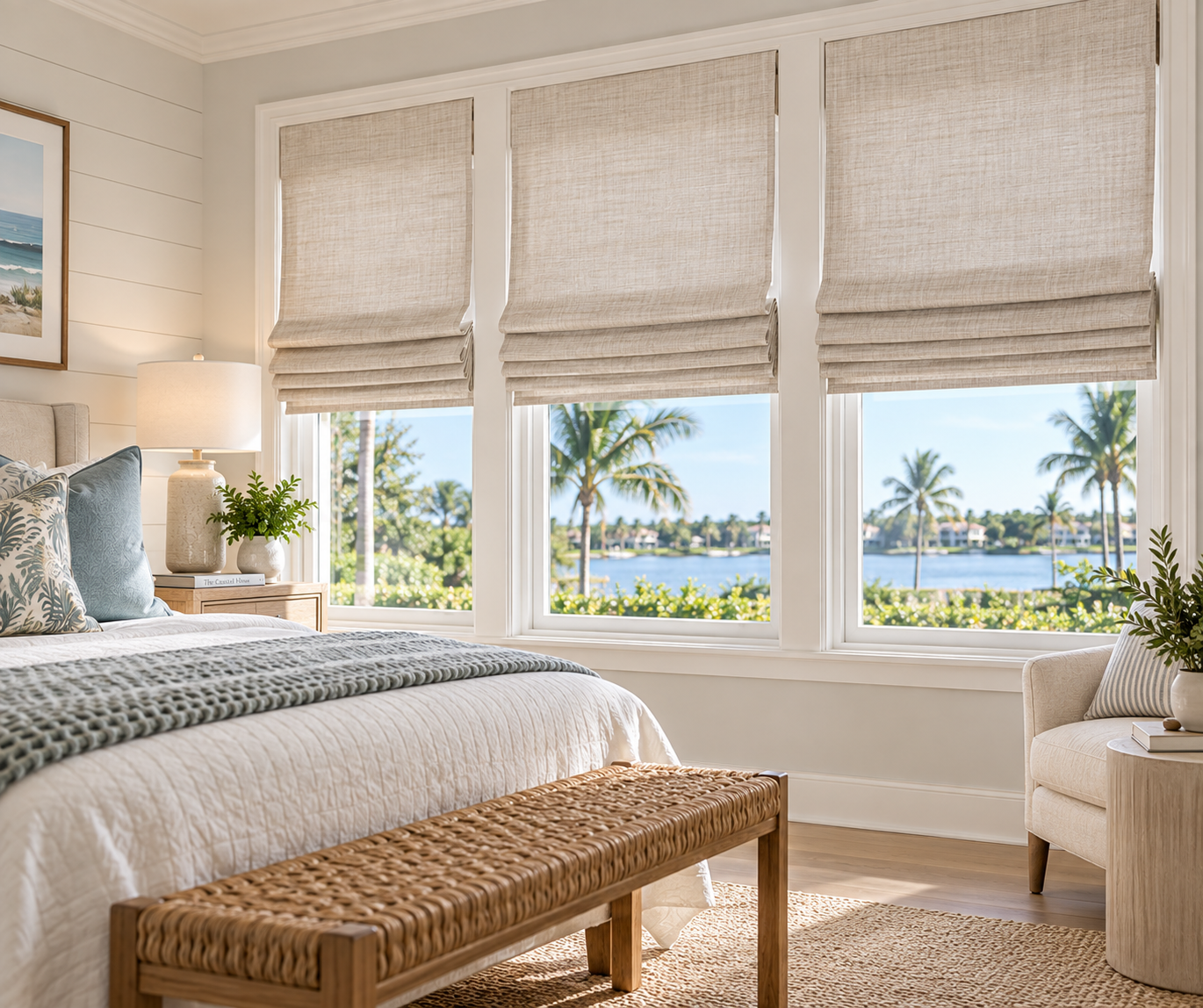
At 4:30 p.m., a west-facing room in Central Florida can feel like a completely different space. The sun is low, bright, and relentless, pouring heat across floors and furniture just when your family is settling in for the evening. The right west facing window shades can soften that daily blast of glare without turning a beautiful room into a cave.
For many homeowners, this is not simply a decorating decision. It is about making a living room usable, protecting a favorite rug, keeping the kitchen cooler, and enjoying the view without squinting through it. The best choice depends on your windows, exposure, privacy needs, and the way you want your home to feel after the sun goes down.
Why West-Facing Windows Need a Different Approach
Morning sun can be pleasant. West sun is another story. It hits later in the day, often when outdoor temperatures have already climbed, and it comes in at an angle that slips past shallow overhangs and reaches deep into a room.
That combination creates three common frustrations: intense glare on televisions and screens, uncomfortable radiant heat near the glass, and fading on flooring, artwork, upholstery, and wood finishes. Large sliding doors, picture windows, and open-concept rooms can make the effect even more noticeable.
A light-filtering fabric that works beautifully on an east-facing bedroom may not provide enough control on the west side of the house. This is why an in-home consultation matters. Seeing the exact direction of the sun, the size of the opening, and the room’s color palette makes it easier to choose a treatment that looks polished and performs when you need it most.
The Best West Facing Window Shades for Florida Homes
There is no single best shade for every west-facing opening. Some homeowners want a soft, airy look with daytime visibility. Others need serious room darkening for a media room or bedroom. The right answer can also change from one room to the next.
Solar Shades for Views and Daytime Glare
Solar shades are a favorite for west-facing living areas with a pool view, golf-course view, or backyard you do not want to hide. Their specialty fabric filters harsh sunlight and reduces glare while preserving an outward view during the day.
They are especially useful in great rooms and offices where direct sun makes a television, laptop, or tablet difficult to use. Openness matters: a more open weave gives you a clearer view and more natural light, while a tighter weave provides stronger glare and heat control but reduces visibility. This is a trade-off worth seeing in person because the difference is easy to recognize when samples are held against your own glass.
Solar shades are not usually the best choice when nighttime privacy is the top priority. After dark, interior lights can make a room more visible from outside. Pairing them with drapery panels or selecting another shade style may make more sense for street-facing rooms.
Cellular Shades for Added Insulation
Cellular shades, sometimes called honeycomb shades, add a layer of insulation at the window. Their pockets of air help slow heat transfer, which can make a noticeable difference beside west-facing glass.
They are a strong fit for bedrooms, bonus rooms, and windows where comfort matters more than preserving a full view. Available in light-filtering and room-darkening fabrics, cellular shades offer a clean, tailored look without adding visual bulk. For a homeowner who feels a hot spot near a favorite chair every afternoon, this option deserves a close look.
Keep in mind that standard cellular shades do not offer the same adjustable view as blinds or sheer shades. When raised, they clear the window; when lowered, they cover it. That simplicity is part of their appeal, but it may not suit every window or lifestyle.
Roller Shades for Clean, Flexible Style
Roller shades have come a long way from the basic shades many homeowners remember. Today, they can be made in designer fabrics ranging from subtle linen-like textures to sleek solar materials, with options for light filtering, privacy, or room darkening.
For west-facing windows, roller shades work well when you want straightforward control in a modern, coastal, or transitional home. A blackout roller shade is particularly helpful in a bedroom where the late-day sun raises the room temperature or interrupts an early evening nap. A solar roller shade offers the view-friendly alternative for shared living spaces.
Motorization makes roller shades even more useful. Instead of closing every shade manually as the sun swings west, you can lower them with a remote, wall control, or programmed schedule. It is a small daily convenience that feels especially welcome on tall windows and wide banks of glass.
Woven Wood Shades for Warmth With a Layered Solution
Woven wood shades bring natural texture to a room, making them a beautiful choice for coastal, casual, and organic interiors. They can soften large windows and add character that a plain fabric shade may not provide.
On their own, however, woven materials may allow more light through than a hard-working west-facing window needs. Adding a privacy or blackout liner changes the equation. You get the texture and warmth you love, along with stronger light control and a more comfortable room. This layered approach is ideal when design is just as important as performance.
Plantation Shutters for Lasting Light Control
Interior shutters are not technically shades, but they are often one of the smartest solutions for west-facing windows. Adjustable louvers let you redirect sunlight upward, reduce glare, and maintain privacy without closing off the room completely.
For Central Florida homes, durable composite shutters can be an excellent option in sunny, humid spaces. They offer a finished architectural look, work well with many design styles, and do not require cords or fabric panels. Shutters are an investment, but for a forever home, their durability and timeless appearance can make that investment worthwhile.
Details That Make a Big Difference
The shade material is only part of the decision. An outside mount can cover more of the window frame and minimize light gaps, while an inside mount creates a crisp, built-in appearance. The best mounting style depends on window depth, trim, and how much light control you need.
Color matters, too. Lighter fabrics often blend easily into a bright Florida home, but darker solar fabrics can improve glare control and preserve a clearer view outward. For a west-facing room, do not choose a color from a tiny swatch alone. Look at it against your wall paint, flooring, and afternoon light.
For sliding glass doors or oversized windows, vertical solutions may be more practical than individual shades. Panel track blinds, vertical cellular shades, and motorized options can cover broad openings while still allowing easy access to a patio, lanai, or pool area.
When Motorization Is Worth It
Motorized shades are particularly useful on west-facing windows because the need for them is predictable. The sun arrives at roughly the same time each day, and automated schedules can respond before the room becomes uncomfortable.
They are also a practical choice for windows over a staircase, above a soaking tub, or across a high vaulted wall. Rather than leaving those windows uncovered because they are difficult to reach, you can enjoy real light and heat control at the touch of a button. For families, cordless motorized options also create a cleaner, safer look around children and pets.
Get the Fit Right Before You Buy
A shade that looks beautiful but leaves glare pouring around the edges will not solve a west-facing window problem. Precision measurement, the right fabric openness, and professional installation all affect how well the finished treatment performs.
Florida Blinds And More brings samples to your home so you can compare colors, fabrics, and control options where they will actually live. You can see how a solar shade handles your view, how a blackout liner changes a bedroom, or how shutters complement your trim before making a decision. Then an in-house installation team handles the details, so your finished windows feel intentional from every angle.
Your west-facing windows do not have to dictate when a room is comfortable. A well-chosen treatment lets you keep the light you love, block the parts you do not, and enjoy your home long after the afternoon sun starts doing its worst.
